AI Fashion Design Tools — An Honest Assessment of Where We Are
Generative imagery is impressive. Can it run your design studio? Not yet. Here's the actual capability map for AI fashion design tools in 2026 — what works, what doesn't.

If you've watched a friend in a design studio quietly close a generative-AI tab and go back to a sketchbook, you know the gap. AI fashion design tools demo well on Instagram. They're a different proposition once you put a real garment workflow against them.
This is a frank capability map of AI fashion design tools as they exist in mid-2026, written without the marketing varnish.
Where AI fashion design tools work today
Mood boarding and direction. Generative imagery for early-stage direction is now genuinely useful. Tools can riff on a verbal prompt — "1990s Milanese tailoring meets utility, muted palette, oversized" — and produce dozens of usable reference images in minutes. This used to be a Pinterest afternoon plus a junior assistant pulling tear sheets. Now it's a single workflow. The output is reference, not artwork. But for direction-setting? Real time savings.
Color and palette exploration. Generating cohesive palettes, exploring variations on a color story, testing how a palette renders across different garment types — this is fast and useful. Designers we work with use AI fashion design tools for palette work and rarely go back.
Quick-and-dirty visualisation. "What would this in a heavier fabric look like?" "What if the silhouette was more cropped?" Iterating visualisations early in the process, before tech-pack stage, is what current AI fashion design tools are best at. Not finished. Not technically accurate. Directional.
Trend reference assembly. Pull together a visual reference deck for a trend you're chasing. AI fashion tools handle this fast — search, curate, lay out, annotate.
Where they don't work yet
Tech packs. AI generation cannot produce tech-pack-grade specificity. Stitch types, seam allowances, construction details, fabric weights, hardware spec — the level of precision a tech pack requires is not in any current AI tool's output. A human pattern-maker still owns this.
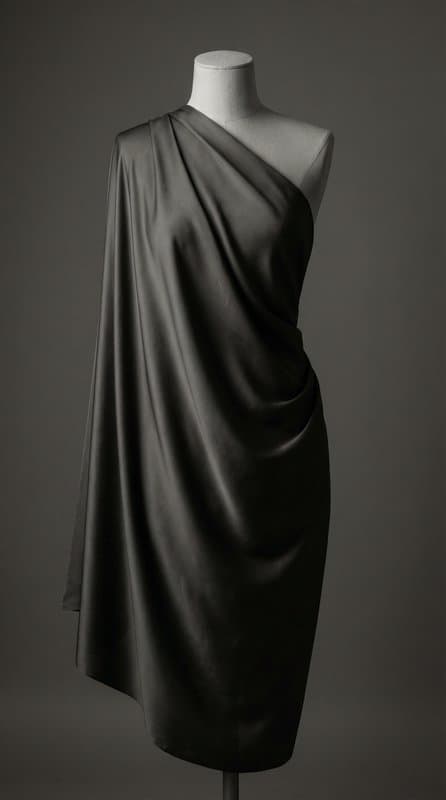
Fabric drape and physical accuracy. Generated images of garments often look correct in still imagery and physically nonsensical when you imagine them in motion or on a body. A "linen" garment in a generated image may flow like silk. A "leather" garment may shimmer wrong. The tools don't yet model fabric physics with enough fidelity.
Garment construction logic. AI-generated garments routinely have impossible construction — collars that couldn't be sewn that way, sleeves attached at angles a real garment couldn't achieve, fastenings that would never close. Beautiful in pixels. Unmakeable in atelier.
Body-proportion accuracy across diverse bodies. Most AI fashion design tools were trained on imagery skewed toward conventional proportions. Generating accurate visualisations across the full range of body types — a basic requirement for any inclusive brand — remains weak.
Material specificity. "Wool" is a category, not a material. Real design distinguishes between worsted wool, woollen wool, merino weight ranges, melton, flannel, etc. AI tools collapse all of this into "wool" and produce visualisations that ignore the distinctions.
Pattern grading. The mathematical work of grading a base size up and down is precision work that current AI tools don't approach.
What this means in a real studio workflow
Designers who've integrated AI fashion design tools well treat them as upstream tools — direction, mood, color, early ideation. Once the design moves into specification, the AI work product is largely set aside. The pattern-maker, the technical designer, the production team are doing what they always did, with sharper inputs.
The brands trying to use AI fashion design tools downstream — generate the line, hand it to production — are running into wall after wall. Not because the tools are bad, but because they're being used for work they aren't designed for.
The realistic 12-month outlook
We expect three things to shift in the next year.
Better fabric-aware generation. Models that understand drape, weight, and physical behaviour are the obvious next frontier. Several research labs are working on this. Production-ready tools? Probably 2027, maybe late 2026 for early adopters.
Tech-pack assist (not generation). Tools that take a design reference and generate first-draft tech-pack documents — measurements, callouts, basic construction notes — are achievable in the near term. Not full tech packs. Drafts that save the technical designer setup time.
Brand-specific style locking. Tools that learn your brand's specific aesthetic from your archive and generate within those constraints. This is doable now and we'll see the first credible products soon. The current generation of AI fashion design tools generates broadly; the next generation generates within a brand voice.
The honest answer if you're evaluating
If you're evaluating AI fashion design tools for your studio:
- Buy them for upstream work — mood, direction, palette, ideation. They earn their keep there.
- Don't expect them to replace pattern-makers, technical designers, or production teams. They won't, and they shouldn't.
- Test against your actual workflow, not the demo workflow. The demo always works. Your workflow may not.
- Know which tools work with your existing PLM and tech-pack systems. Integration matters more than capability.
The most valuable thing AI fashion design tools do in 2026 is compress the early-stage cognitive work — the "what direction are we going" phase — from a week to a day. That's a real shift.
The rest of the studio still works the way it has for a century, and that's mostly fine. The work that needs human craft is exactly the work AI fashion design tools haven't reached yet.
We'll keep tracking this from inside, and we'll write the next field note when something genuinely shifts. Not when the next demo drops. Follow McLeuker Research on Pinterest and Instagram for the visual side.
Series · Evaluation & Decision Making
3 of 3