A fabric is a set of numbers with a name on it.
Fabrics, materials and manufacturing intelligence. Get the number right and the sample arrives right; get the name right and the mill knows what you meant.

What this sector is a watch on
Fibre prices, mill capacity and certification status - the three inputs that decide whether a costing still holds.
How fast the answer goes stale
A quote holds for weeks. A certificate lapses on a date somebody else set, and nothing tells you.
The vocabulary
Six words that decide whether a roll ships.
Mill work turns on terms that are not descriptions but thresholds - each one sets an accept, a price or a liability.
- 4-point system
- Whether a roll is accepted, re-graded or returned. Defects are scored by length, and the score against the agreed allowance is the decision - not an inspector's opinion of how it looks.
- GSM
- What the cloth costs and how it behaves. Grams per square metre sets the yield per kilo, so it drives the price of the garment as much as the fibre does.
- Shade band
- Which rolls may be cut together. Cutting across bands is the most common cause of a panel mismatch nobody sees until the garment is made up.
- Pilling grade
- Whether the fabric survives the returns line. A grade agreed at sample and not re-tested at bulk is a returns problem written in advance.
- Bow and skew
- Whether the marker can be laid at all. Distortion in the weave puts the grain off, and off-grain panels twist after the first wash.
- Fastness
- What the care label may say, and what the brand carries if it is wrong. Rub, light and wash are separate tests and a pass on one is not a pass.
What each term decides, not what it means. No thresholds printed - an accept level and a duty rate move by contract and market, so the live value is read against your own spec.
Why it is a language problem
The sample arrives wrong for a reason you can name.
Most fabric failures are specification failures wearing a quality complaint.
Who can make your cloth, to which certification, at your minimum and your lead time - and whether the certificate they sent you is still valid.
The material board and the swatch story that carry a hand and a weight, not just a colour.
The material dossier, the 4-point inspection, the tech pack and the landed cost that decide whether the fabric is viable.
What ties the three together is that each is written down. A hand feel is an opinion until it is a weight, a construction and a finish; a colour is an argument until it is a standard and a tolerance. Approving by feel is how the second bulk run comes back different from the first.

Everything above is an argument about how to write this down: the weight, the construction, the finish and the hand, specified precisely enough that a mill three time zones away reproduces it.
Textile · the paperwork
What a material decision leaves behind.
Every cover is a document the platform produced end to end. These are the artefacts a mill, a lab and a buyer each need a copy of.
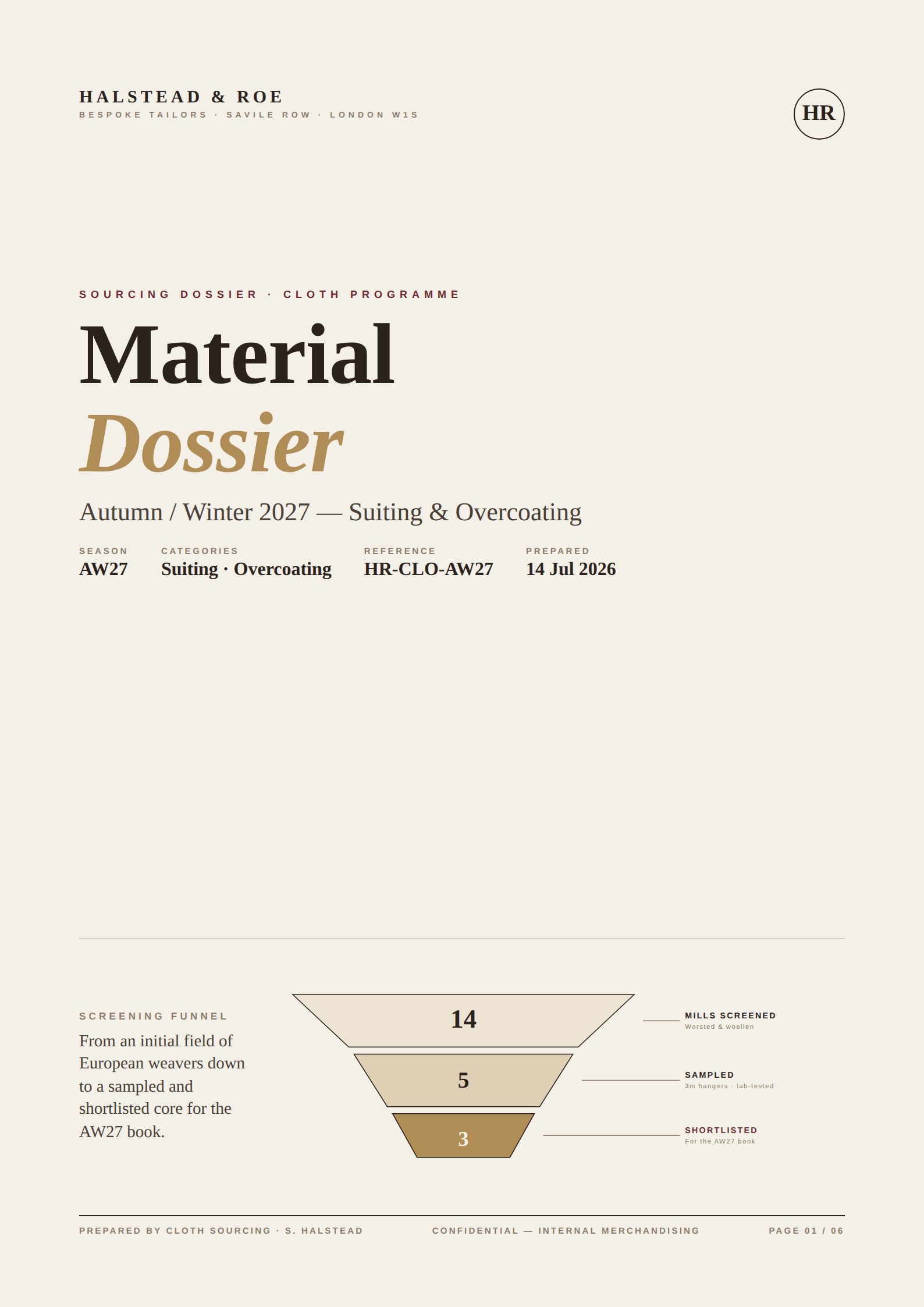 PDFMaterial Dossier - Halstead & Roe AW27 Suiting & Overcoating6 pages · open the file
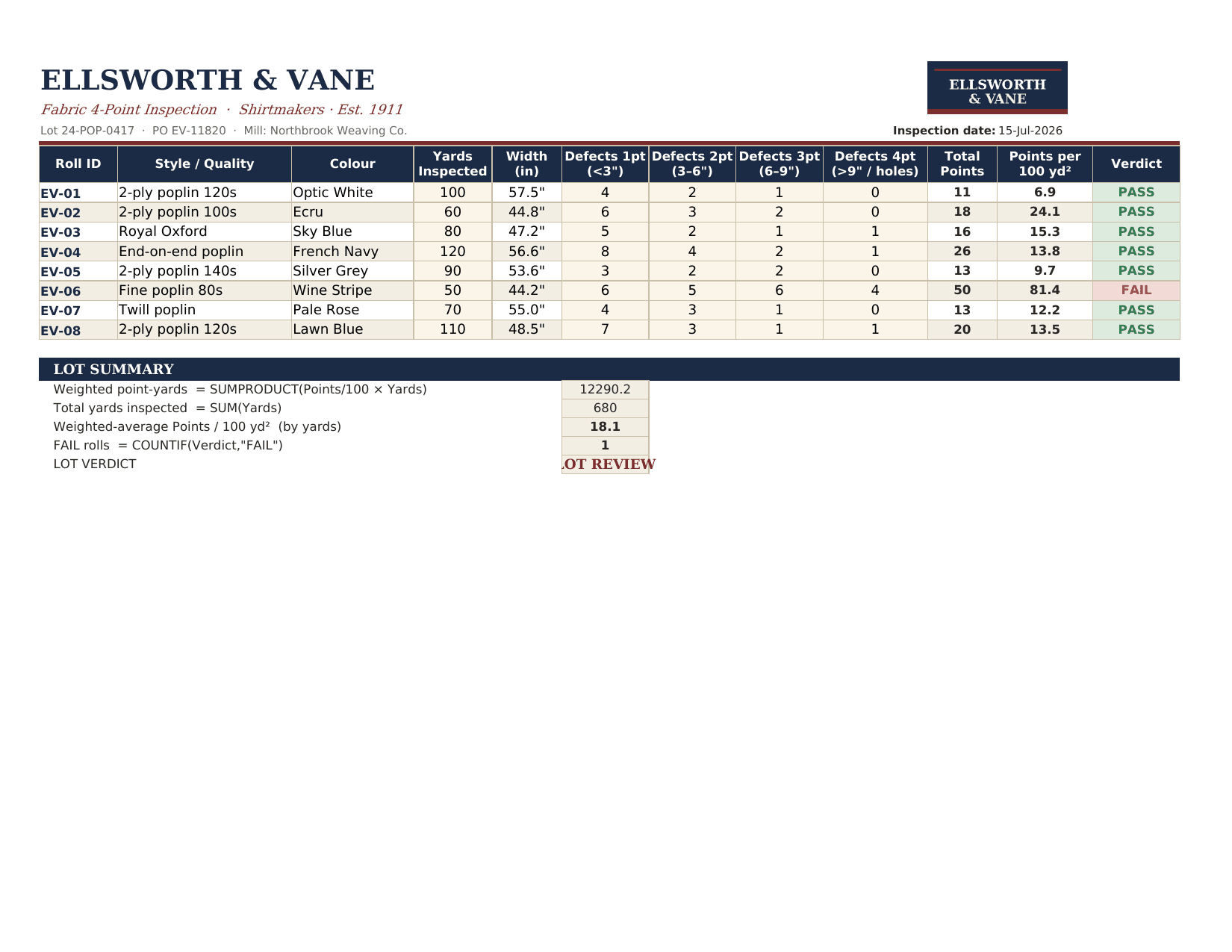 ExcelFabric 4-Point Inspection - Ellsworth & Vane3 pages · open the file
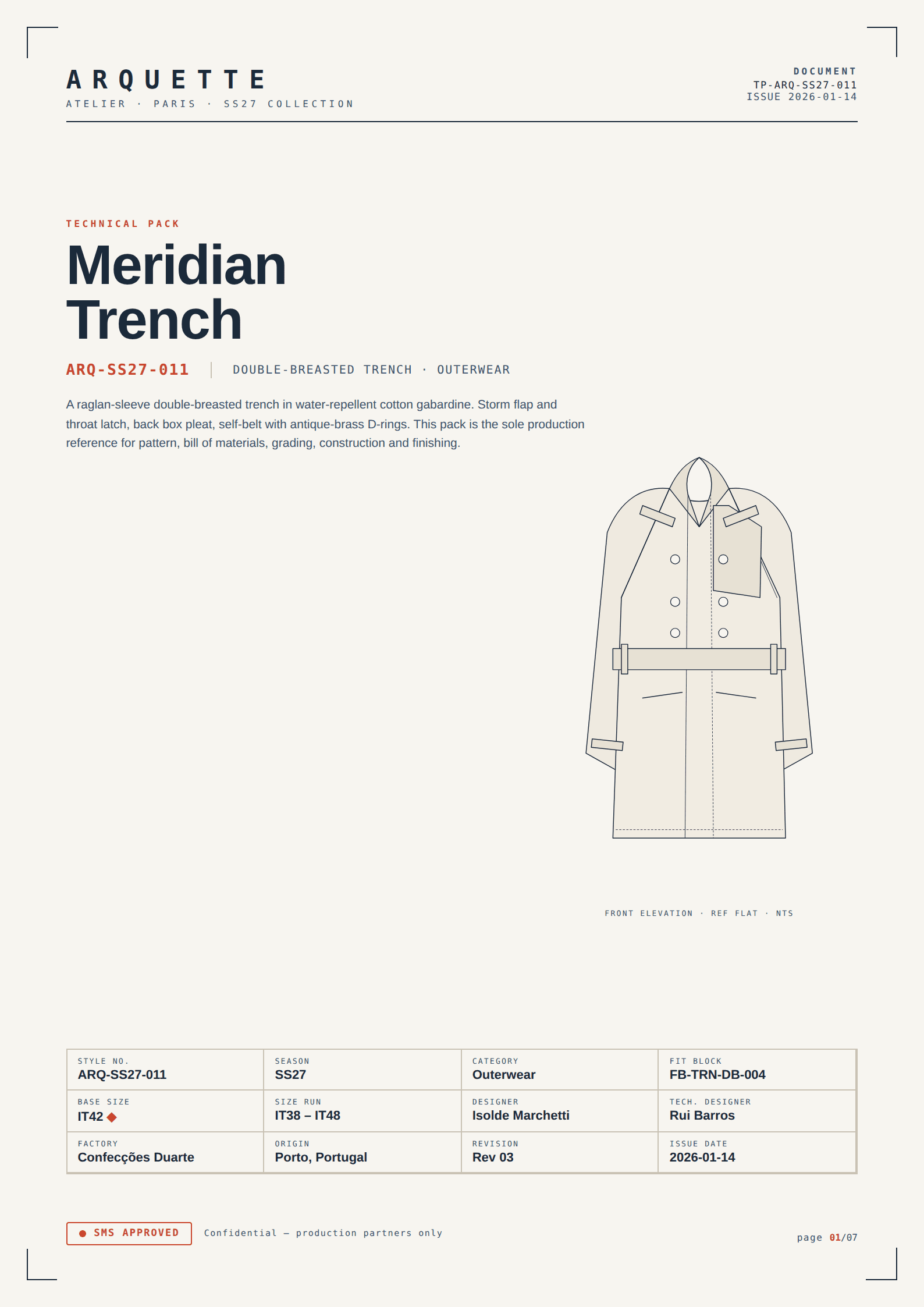 PDFTechnical Pack - ARQ-SS27-011 Meridian Trench7 pages · open the file
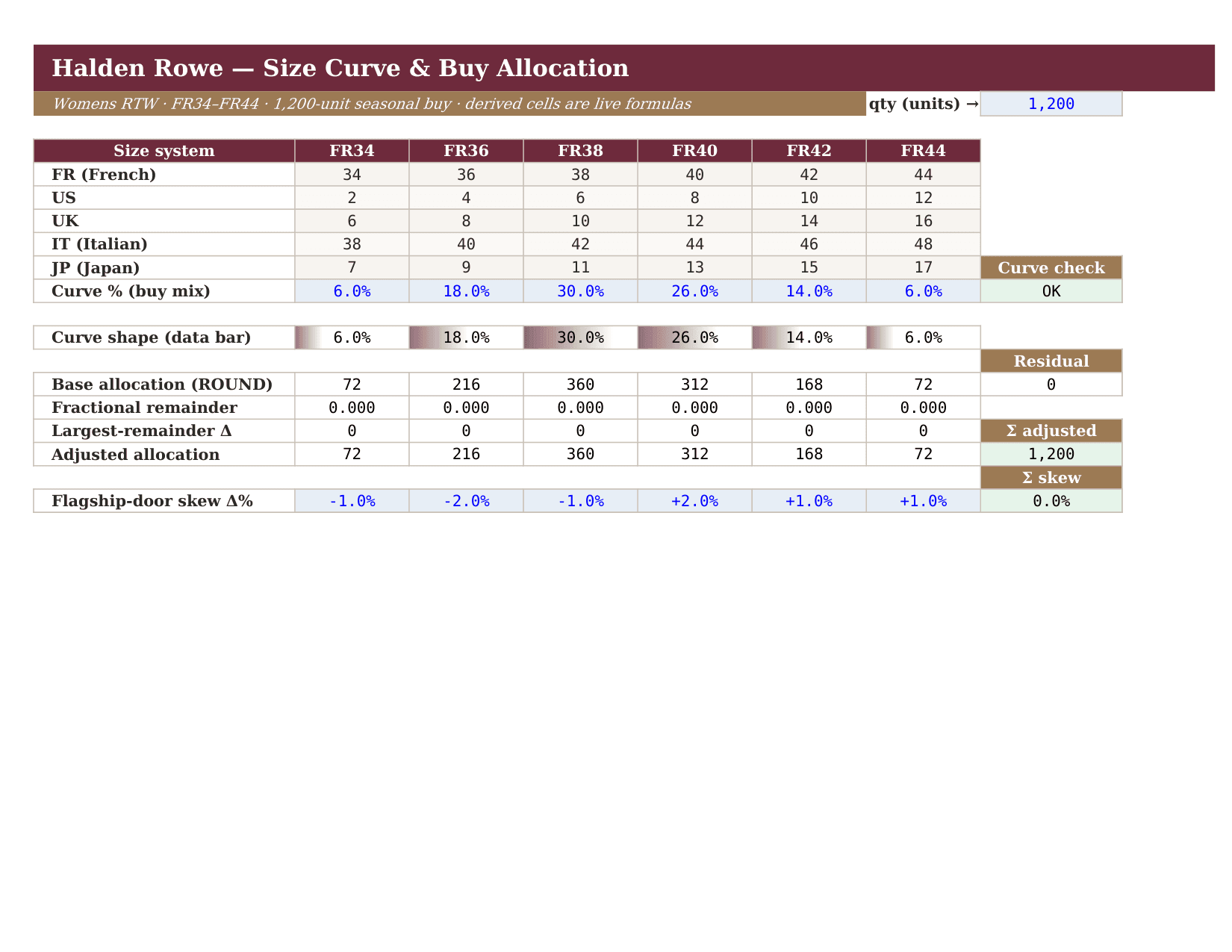 ExcelSize Curve & Grading - Halden Rowe RTW4 pages · open the file
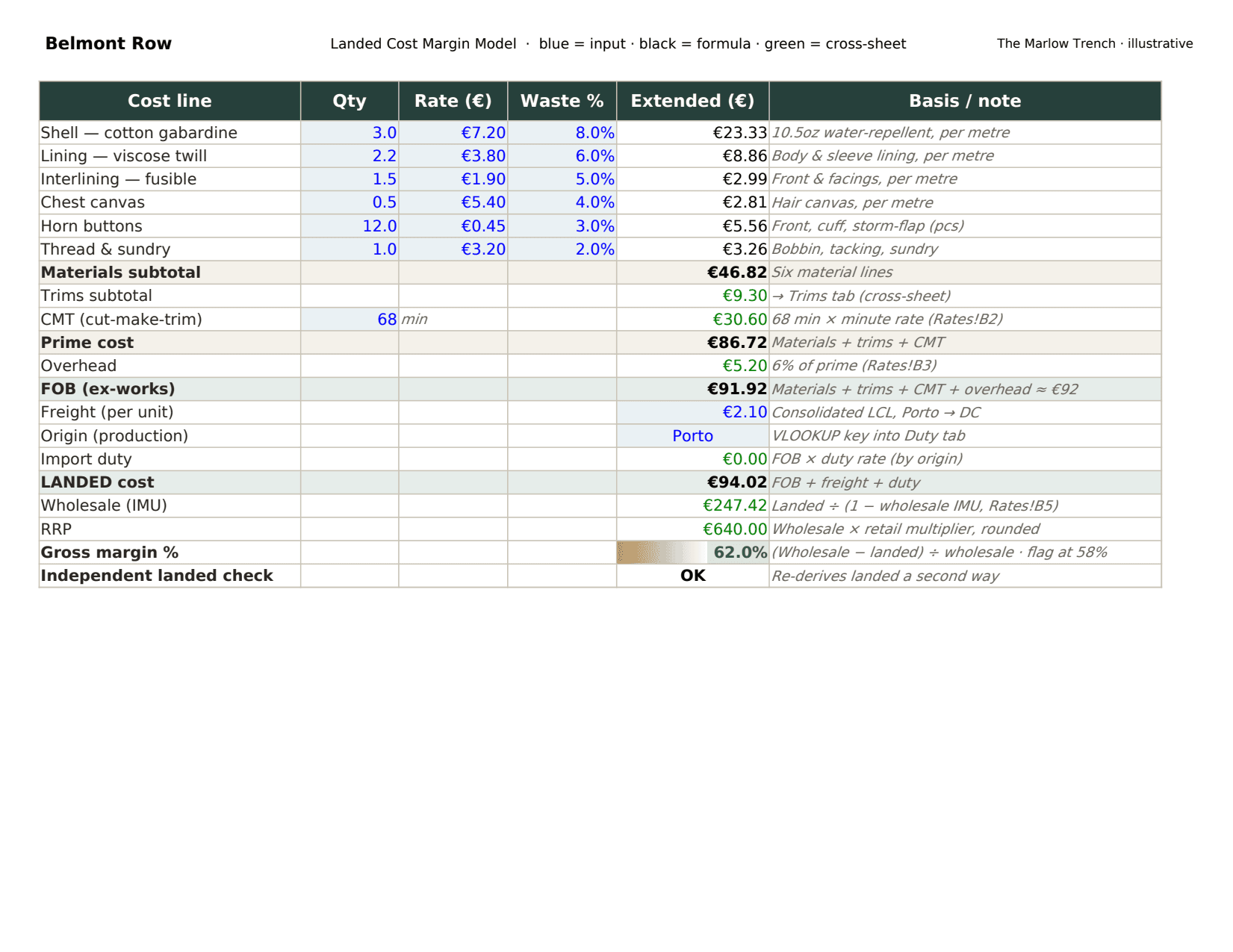 ExcelLanded Cost & Margin Model5 pages · open the file
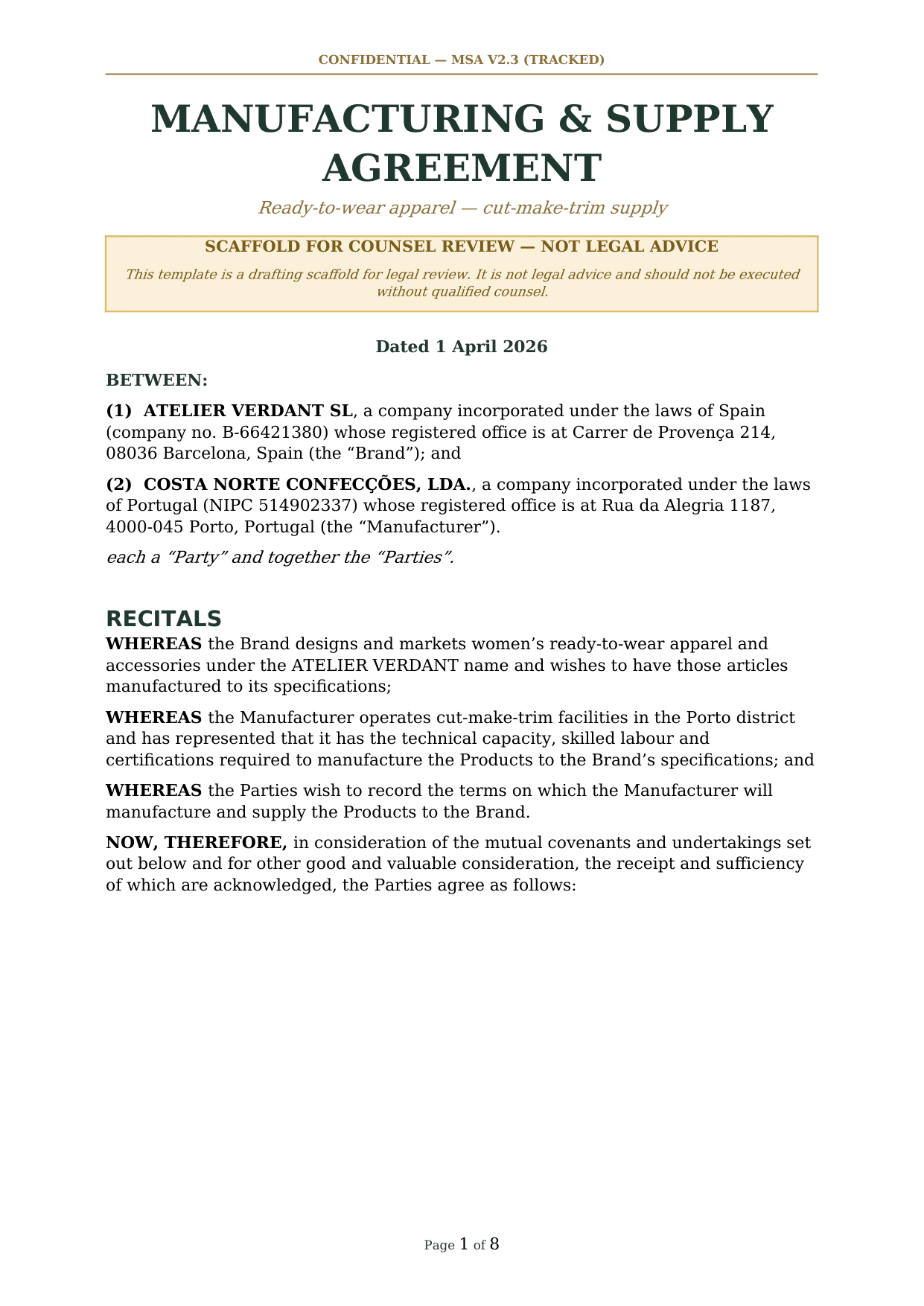 WordManufacturing & Supply Agreement8 pages · open the file
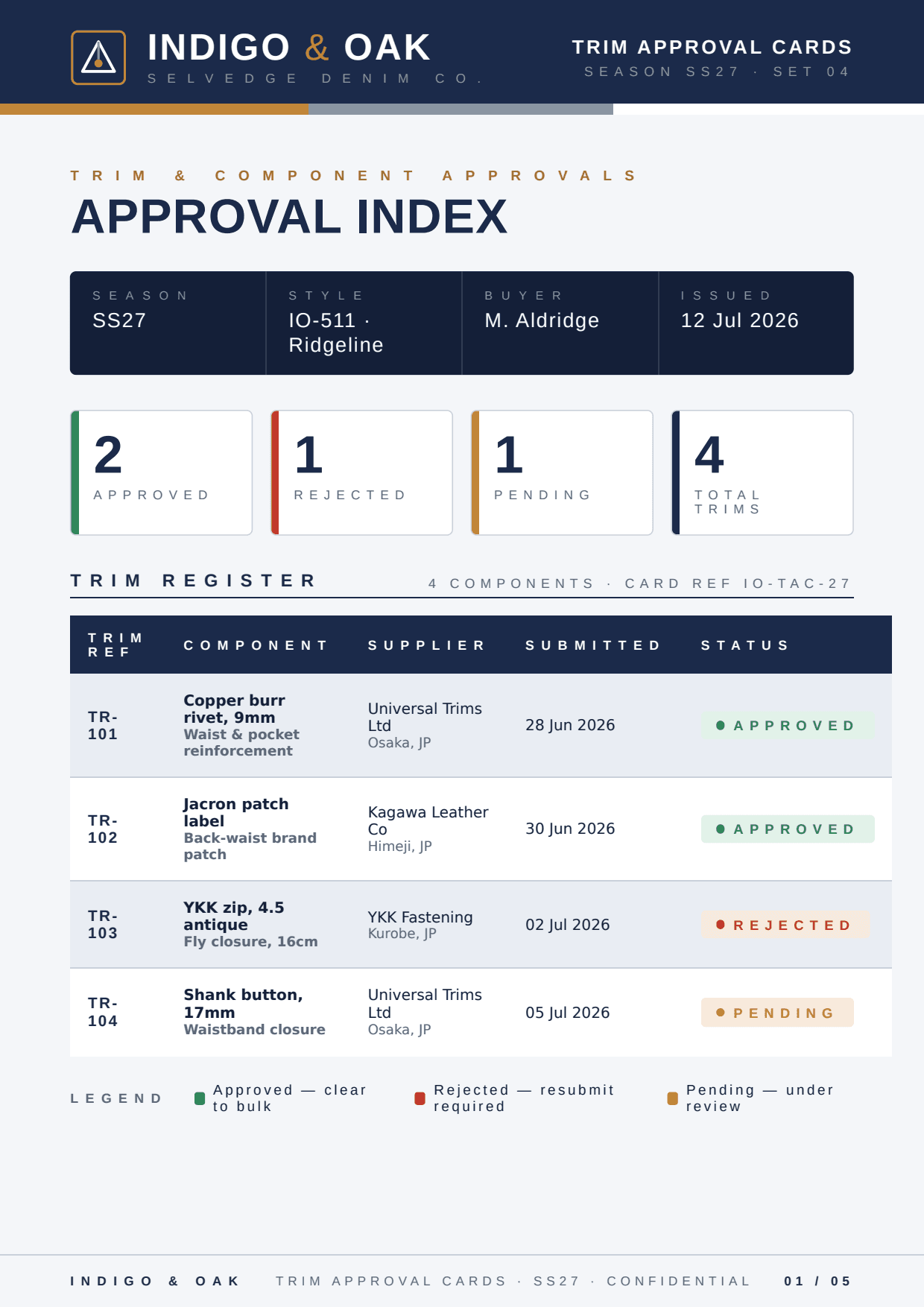 PDFINDIGO & OAK - Trim Approval Cards SS275 pages · open the file
What actually runs
Sourcing a cloth, testing it and specifying it are three trades, so the work is split three ways. One system, 110 tools and 235 playbooks behind it.
Handed to
- Materials Specialist
- Sourcing Analyst
- Production Specialist
- Sustainability Analyst
Get started
Start with a textile question.
Ask it in plain language and get the document, the creative or the spec back - sourced, and yours to edit.