By Sector · Fashion Tech
The tooling is easy. Adopting it is the project.
Wearables, generative AI tools and digital innovation. Most of what fails here fails at the handover, not at the demo.
- playbooks this work reaches for
- 5
- specialists it is split across
- 4
- documents shown in full on this page
- 5
The order it has to happen in
Three steps, and the second one is where projects die.
A tool nobody has agreed to own is a pilot forever. These are the questions, in order.
- 01
What is worth adopting
What is actually shipping versus what is being announced, and which tools genuinely change a studio's cost base rather than its slide deck.
The comparison that matters is against your current process, not against a competitor's tool.
- 02
What it replaces
The evaluation and the demo material that let a team see the difference rather than read about it.
If nothing is retired, the new system is an extra step and will be routed around.
- 03
What it has to output
The board deck, the proposal and the statement of work that get a tool adopted.
Adoption follows the artefact. A system that produces the document people already need gets used.














What this sector is a watch on
What the tools can newly do, and what competitors have quietly started doing with them.
How fast the answer goes stale
A capability gap is invisible until a competitor ships on it, at which point it is a lead rather than a gap.
The vocabulary
Six words that decide whether a tool is real.
Evaluating fashion tech means separating what ships from what is announced. Each term is where a demo and a deployment usually diverge.
- 3D sample
- How many physical rounds you still pay for. The saving is real only if the factory accepts the file as the spec, which is a supplier question rather than a software one.
- Digital twin
- Whether the model is authoritative or decorative. If production does not read from it, it is a visualisation with a maintenance cost.
- PLM integration
- Whether a tool becomes the source of truth or a second place to type. Most evaluations skip this and it is the one that determines adoption.
- Body scan
- Whose measurements the fit is graded to. A scan population that does not match your customer moves the fit problem rather than solving it.
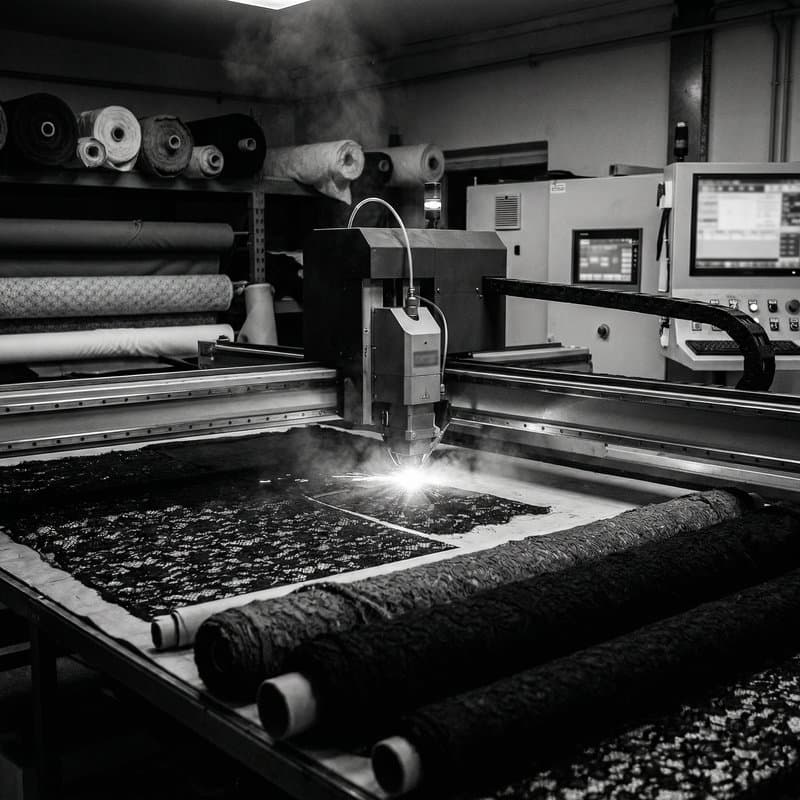
- Automated cutting
- The minimum order that makes sense. Tooling and setup amortise over a run, so the technology changes the break-even, not the unit cost.
- On-demand
- Where the inventory risk sits. It moves from stock to capacity, which is a different risk rather than an absent one.
What each term decides, not what it means. No thresholds printed - an accept level and a duty rate move by contract and market, so the live value is read against your own spec.

It lands on a table, in front of somebody with a deadline and an existing way of doing this.
Fashion Tech output
The documents this work produces.
Real deliverables, produced end to end.

VESTAL - Q2 2026 Board Pack
Deck · page 1 of 11
Switch deliverable
What actually runs
Evaluating a system and rolling one out are different jobs, and the second one is the one that needs the operator. One system, 110 tools and 235 playbooks behind it.
Handed to
- Analyst
- Software Engineer
- Growth Strategist
- Researcher
Get started
Start with a fashion tech question.
Ask it in plain language and get the document, the creative or the spec back - sourced, and yours to edit.