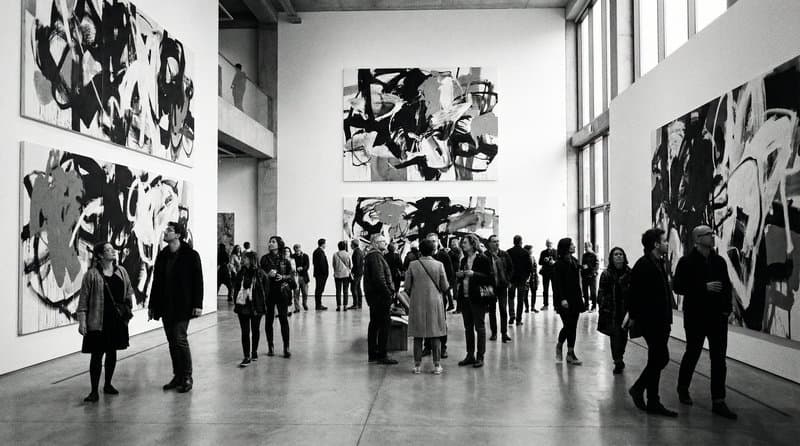
By Sector · Culture
By the time it is a trend it is already priced in.
Art, music and cultural influence on fashion. The value is in reading a signal while it is still cheap to act on, and in knowing how long you have.
The timing problem
Everyone sees the same signal. Almost nobody sees it early.
A cultural signal is not scarce information. Acting on it before it is obvious is the scarce part.
Which subcultures, releases and social signals are reshaping how a customer wants to look - and which are noise that will not survive the quarter.
The direction: boards, imagery and the campaign story that reads as belonging rather than as borrowing.
The content calendar and the brand guidelines that keep a cultural position consistent once other people start executing it.
The sources that spot something first are the least reliable, and the ones you can quote in a board deck report it last - which is why the output is dated and cited rather than declared.

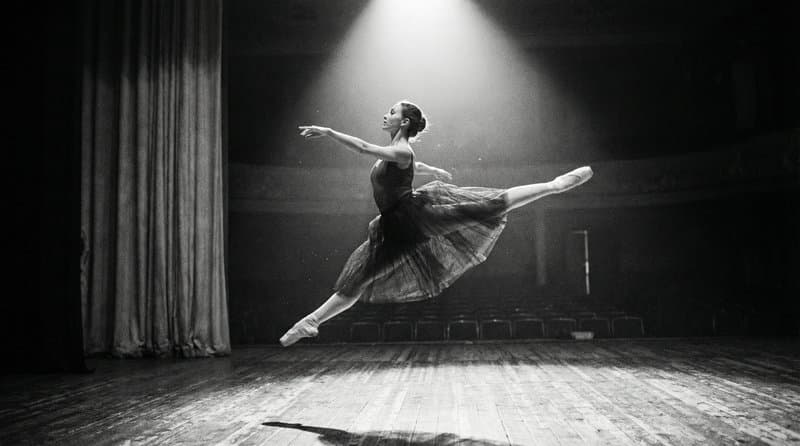












What this sector is a watch on
The music, art and screen references that decide what currently reads as new rather than as recent.
How fast the answer goes stale
A reference peaks and is exhausted inside a season, and using it after that dates the work precisely.
The arc
The widest point is the least useful one.
The same signal is an insight, then a trend, then a liability. Which stage it is in decides whether acting reads as belonging or borrowing.
Origin
Adjacent
Visible
Mass
Spent
- Origin
- A scene, not a trend. Highest value to know, hardest to be sure of
- Adjacent
- Crossing into neighbouring scenes. Still early enough to be first
- Visible
- Named in press. Acting now reads as fast rather than as early
- Mass
- Peak reach, minimum differentiation. The point most brands arrive
- Spent
- Still visible, now dated. Using it signals the wrong thing entirely
Reach and value run opposite ways, so the widest point is the least useful. No months or platforms - speed differs per signal.
Culture · the paperwork
What a signal looks like once it is written down.
The point at which an observation becomes something a team can disagree with.
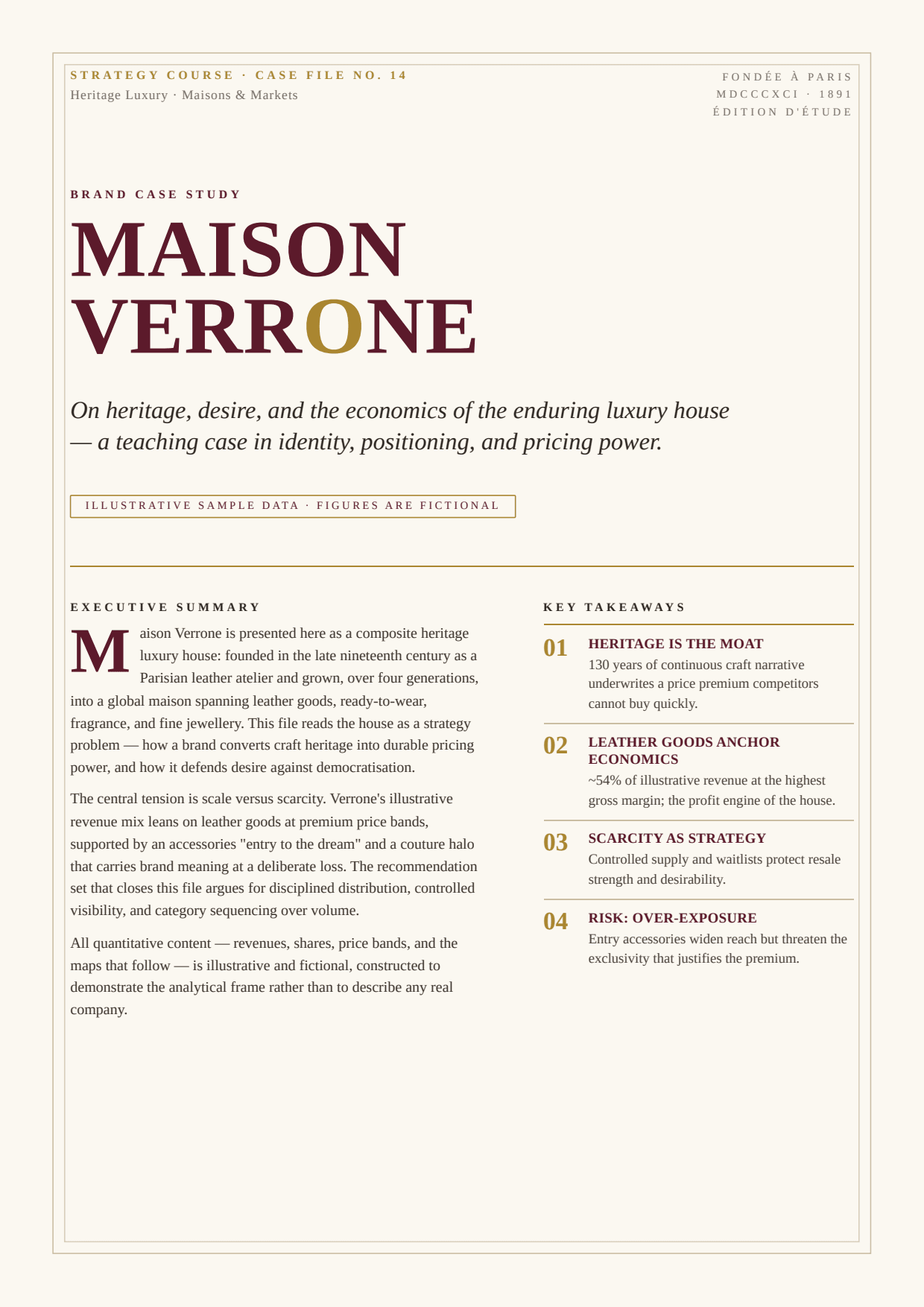 PDFMaison Verrone - Brand Case Study8 pages · open the file
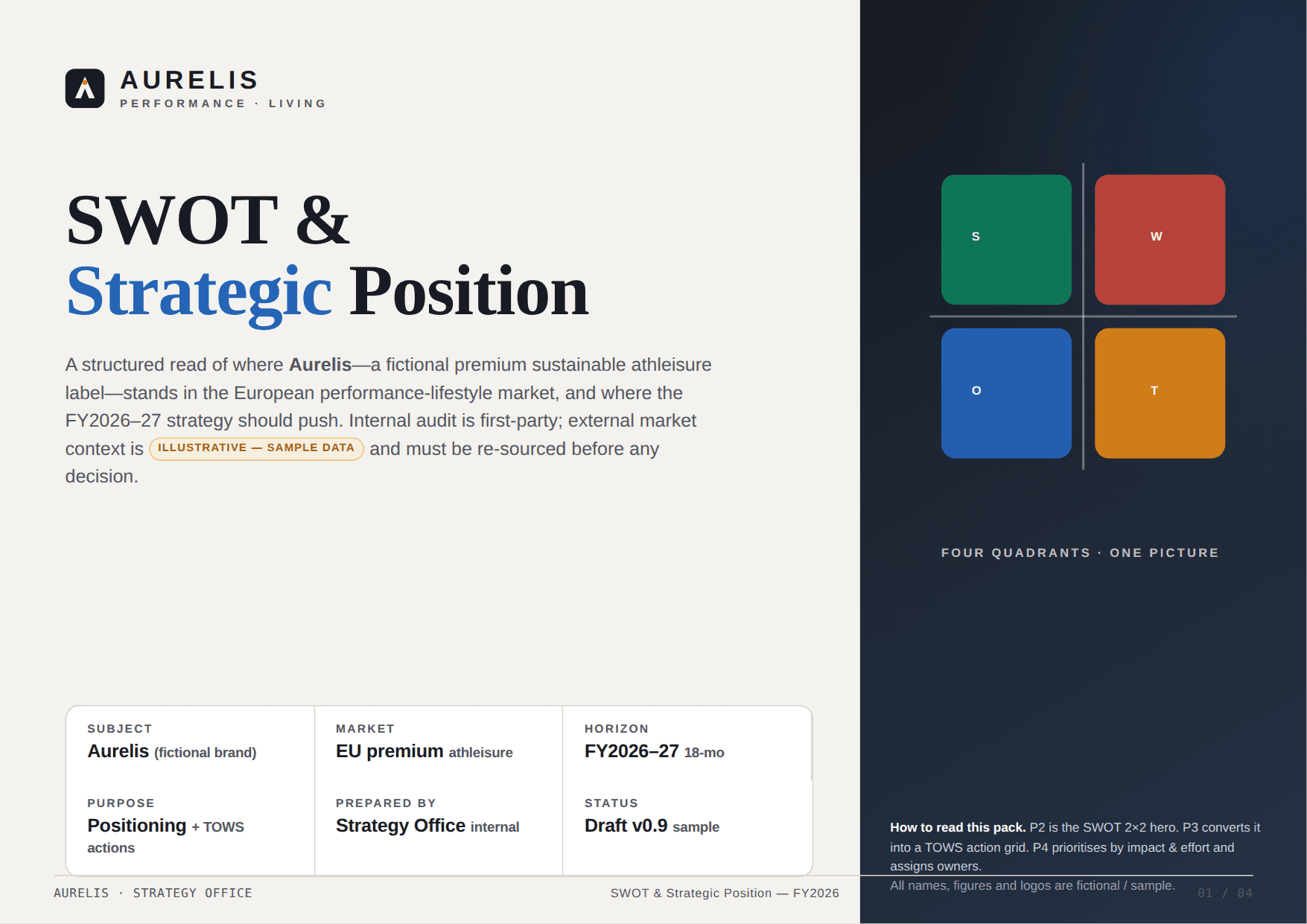 PDFAURELIS - SWOT & Strategic Position (FY2026)4 pages · open the file
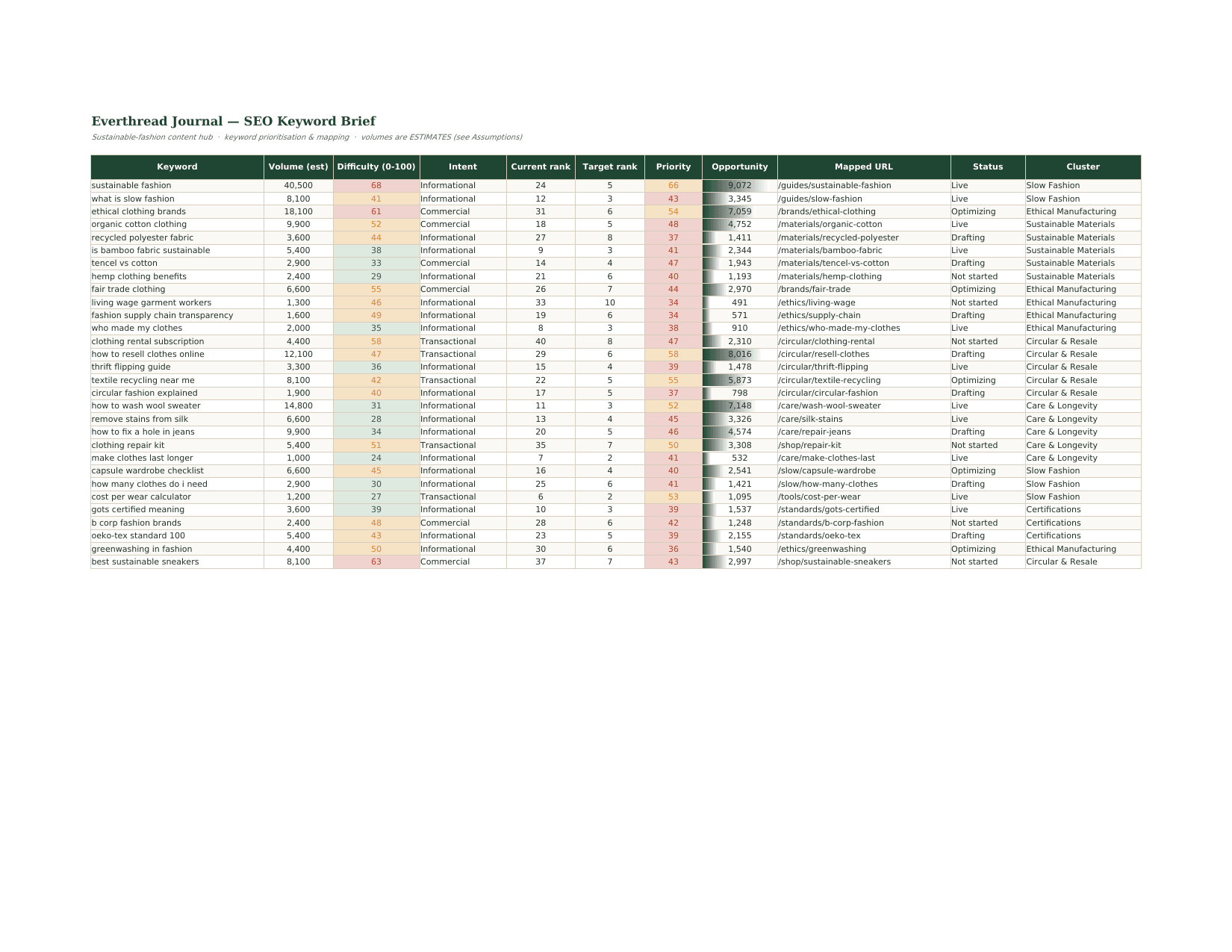 ExcelSEO Keyword Brief - Everthread Journal4 pages · open the file
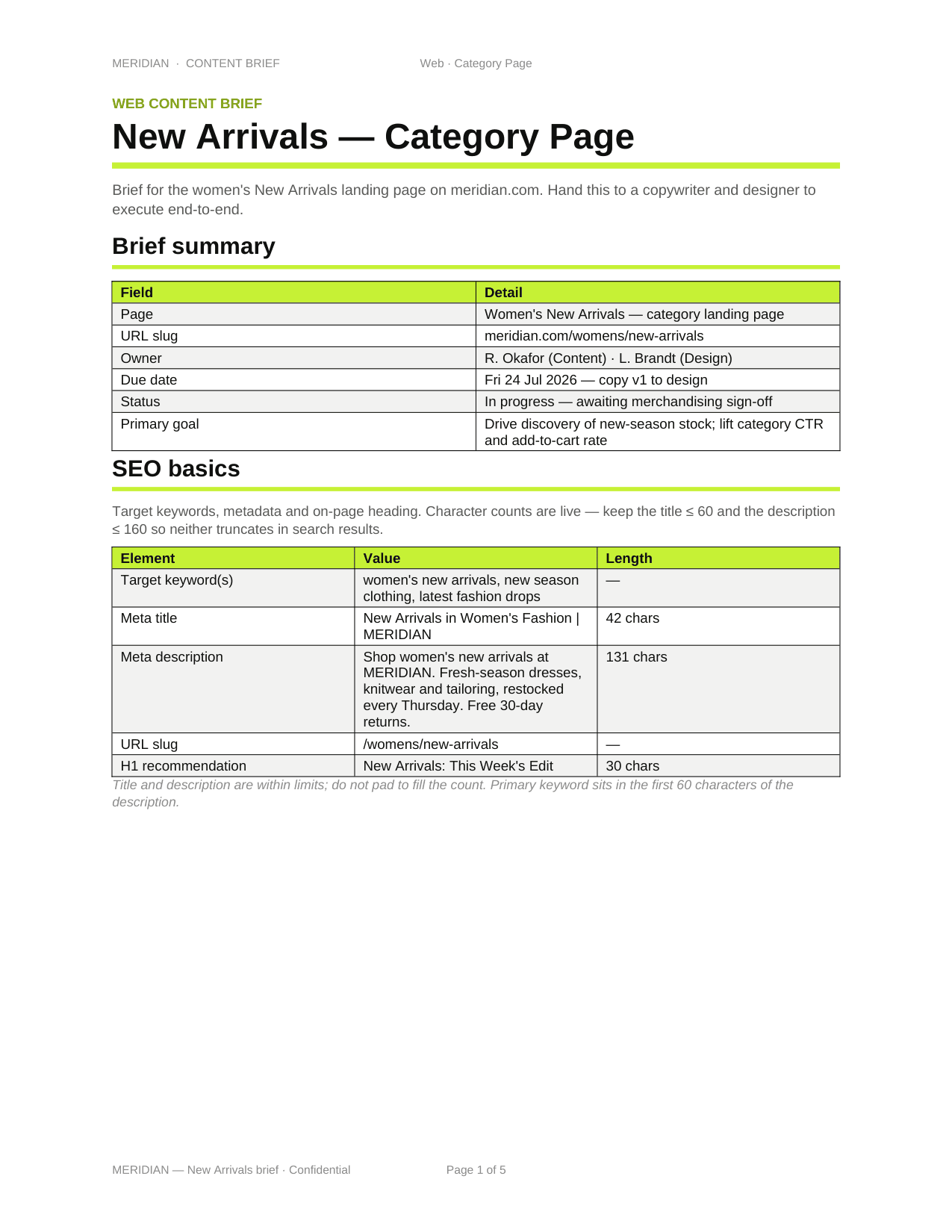 WordNew Arrivals - Category Page Content Brief5 pages · open the file
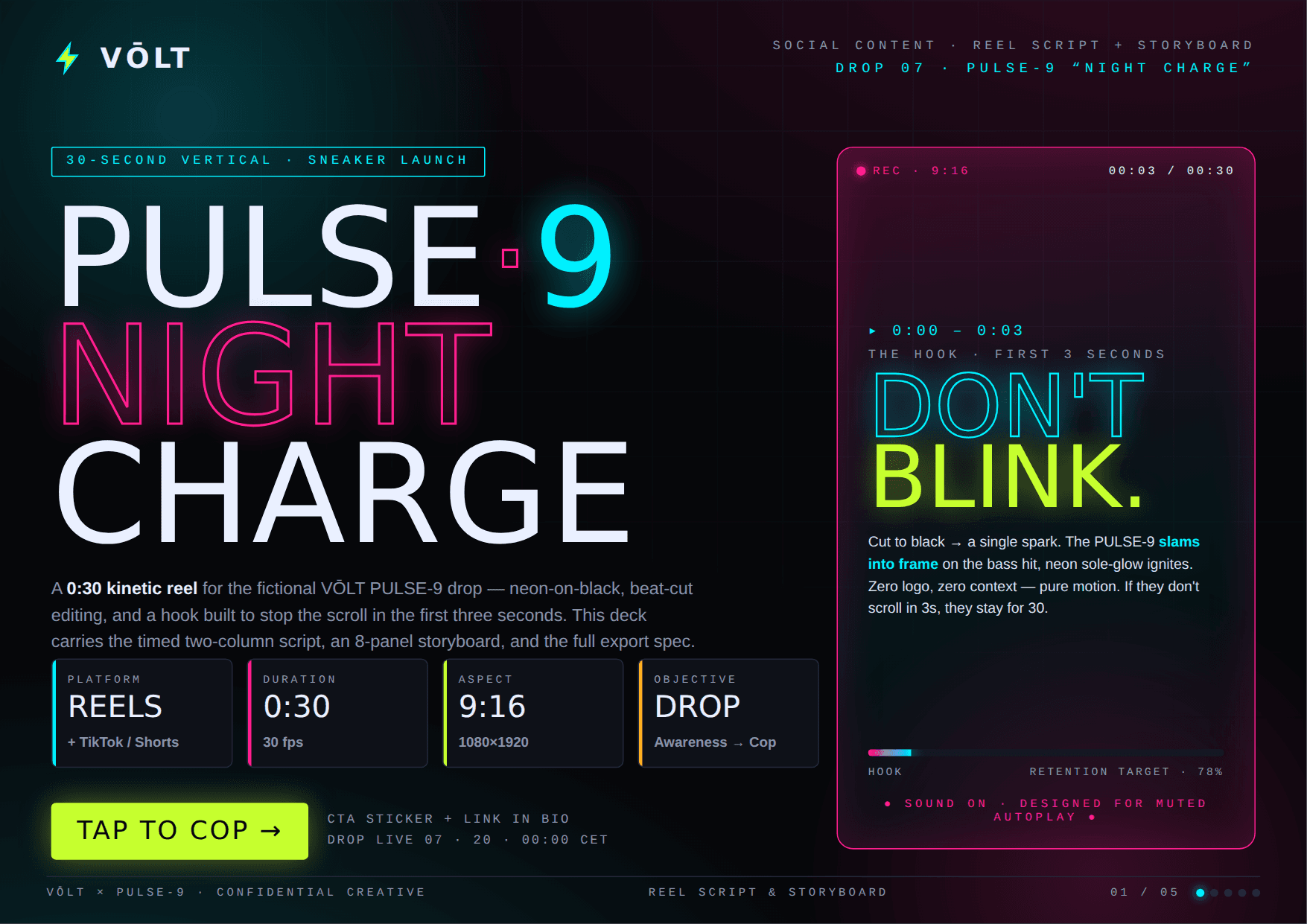 PDFVŌLT PULSE-9 - 0:30 Reel Script & Storyboard5 pages · open the file
Where a signal is visible first
The same thing, at six points on its own curve.
Street, then everyday wear, then editorial, then lookbook, then campaign, then runway - by which point it is priced in.
- 01On the street
- 02In everyday wear
- 03In an editorial
- 04In a lookbook
- 05In a campaign
- 06On a runway
What actually runs
Spotting a signal and substantiating one are opposite skills, so they are not the same seat. One system, 110 tools and 235 playbooks behind it.
Handed to
- Fashion Historian
- Brand Analyst
- Communications Lead
- Researcher
Get started
Start with a culture question.
Ask it in plain language and get the document, the creative or the spec back - sourced, and yours to edit.