Solutions · For retailers & buyers
The Buy Plan Agent turns the store's own figures into the buy: how much, in which sizes, for which stores.
- Made for
- Buying, merchandising and planning teams making the buy
- You get
- Open-to-buy, size curves and vendor orders
Opens in Fashion mode, brief filled in. Standard plan and above.
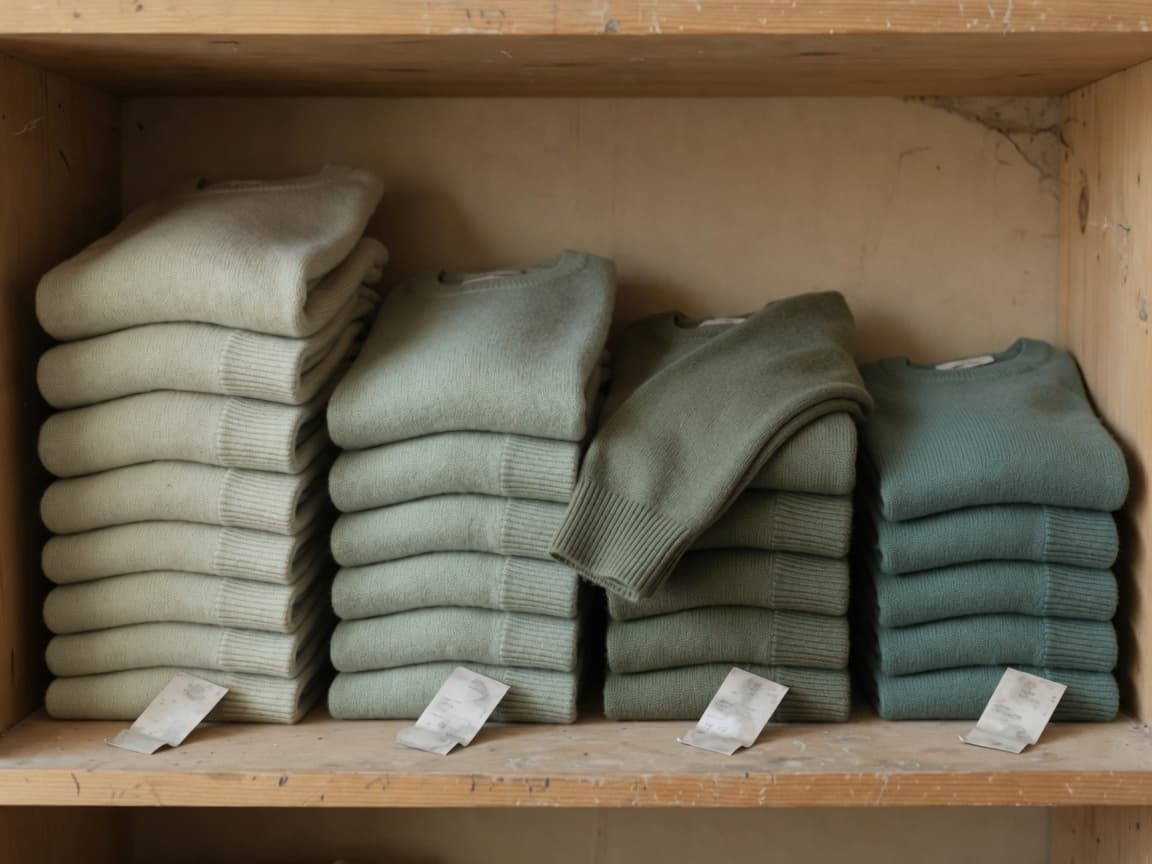
The job, before and after
Without it
You learn the curve was wrong from your own sell-through, which is six weeks after the markdown could have been avoided.
With McLeuker AI
Commit the buy on evidence, before the season has to correct it.
Every season, months before the first unit sells.
Why it is hard
Buying is a series of commitments made months early on incomplete information, and every one of them shows up later as either sell-through or markdown. This is the evidence layer under those calls.
The agent
The Buy Plan Agent
The agent turns the store's own figures into the buy: how much, in which sizes, for which stores.
Build our buy plan with the Buy Plan Agent.
You fill in
- Season
- e.g. AW27
- Sales, stock and receipts by style, size and store
- attach the export, or say 'read our connected Shopify'
- Open-to-buy budget
- amount and currency
- Store clusters
- e.g. flagship, city, outlet
- Competitors to watch weekly
- brands
Read your figures
Phase 1 of 4
- 01
Imports sales, stock and receipts by style, size and store
- 02
Separates true demand from sales lost to stock-outs
- 03
Computes size curves from full-price sell-through, not last season's average
Read the market
Phase 2 of 4
- 04
Scores trend velocity with dated signalsBeta
- 05
Reads competitor price ladders and assortment changes every weekBeta
Build the buy
Phase 3 of 4
- 06
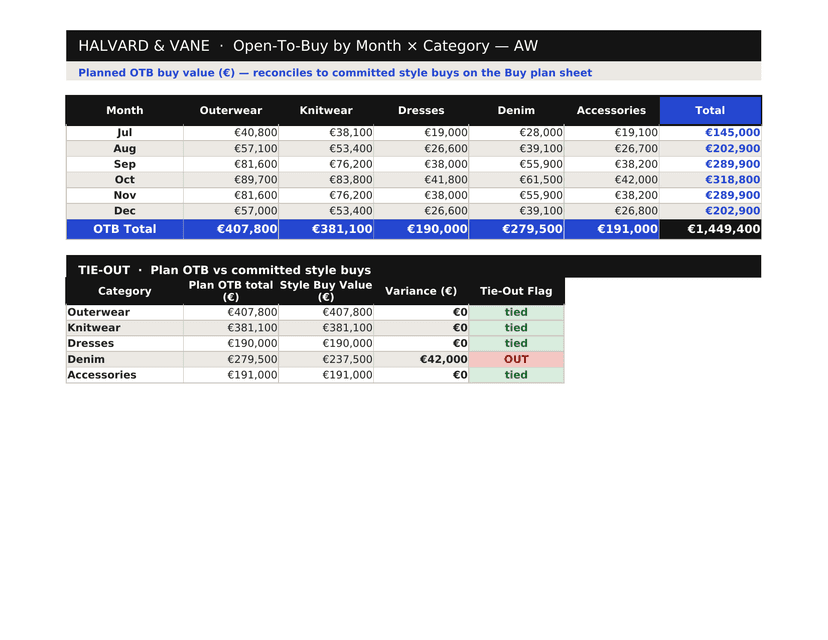
Builds open-to-buy by month and category
- 07
Allocates depth by store cluster
- 08
Drafts the order per vendor
- 09
Flags vendors with lead-time or delivery risk
In season
Phase 4 of 4
- 10
Sets an in-season watchlist of competitor prices and restocks, with alertsBeta
- 11
Proposes chase, cancel or markdown moves early
- 12
Updates the buy-plan workbook with live formulasReports
Open-to-buy, size curves and vendor orders
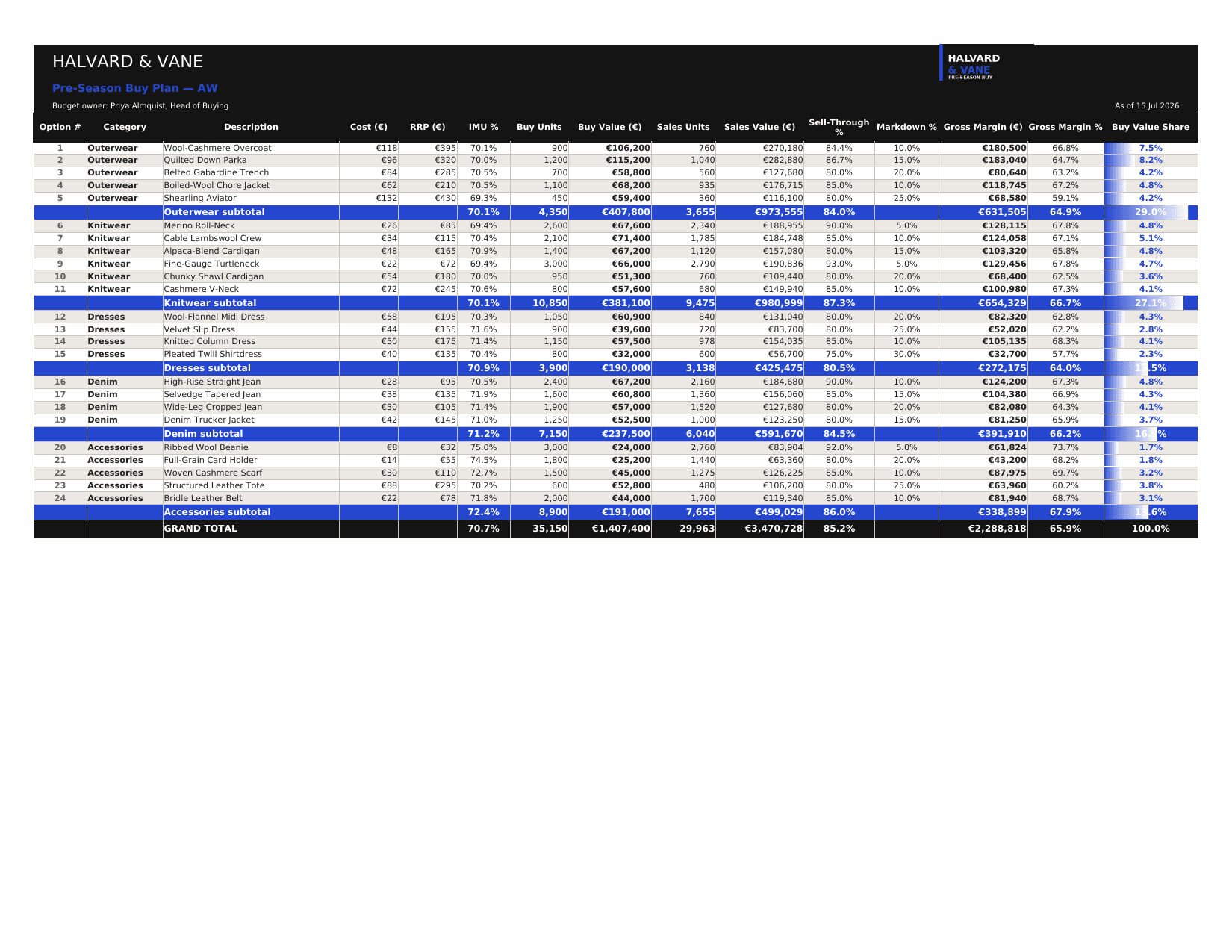
Open an example: Pre-Season Buy Plan - Halvard & Vane AWIn depth · Build the buy
Nine months between the commitment and the first honest number.
Every unit is bought before any of it is known, and the only correction available late is price. These are the three moments where that gap actually costs something.
T−9 MTH
The buy is committed. Nothing is known yet.
You commit the buy nine months before you learn if it was right.
Every unit is bought on a forecast, and the correction is a markdown.
IN SEASON
Their ladder moves. Yours was set in spring.
The competitor dropped the price and you found out from your own sell-through.
They have had weeks of it, and you react into a price they already set.
EVERY BUY
The curve is copied from last season.
The size curve is last season's, averaged.
The middle sells through in three weeks and the ends become the markdown.
What you get
Open-to-buy, size curves and vendor orders.
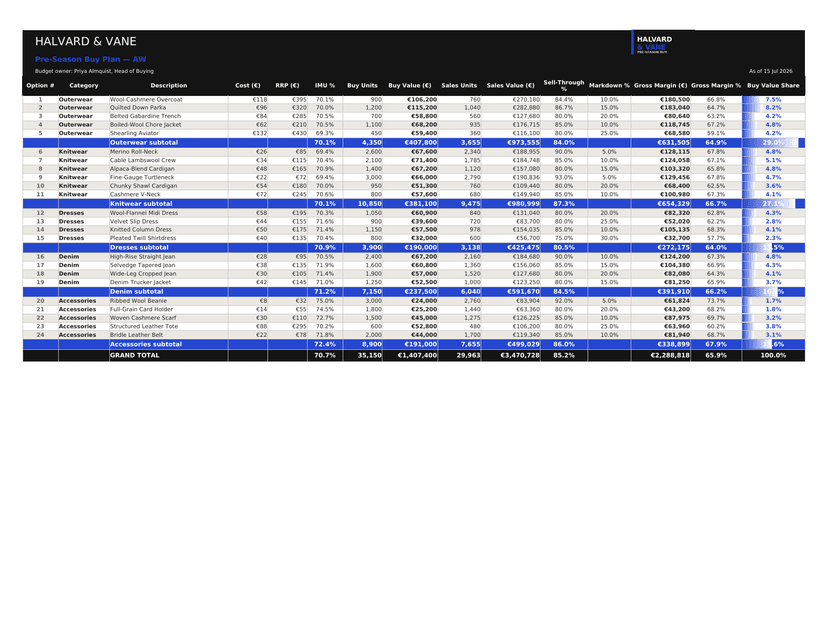
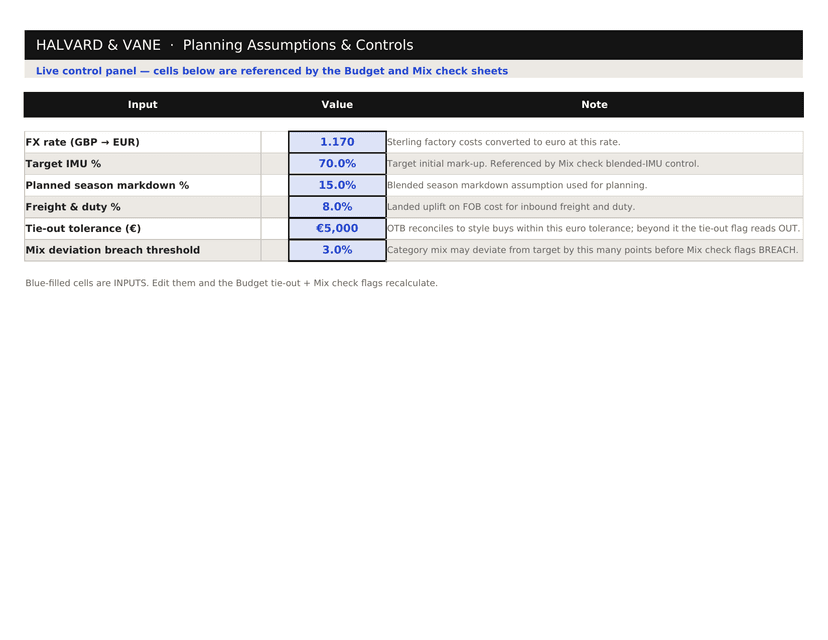
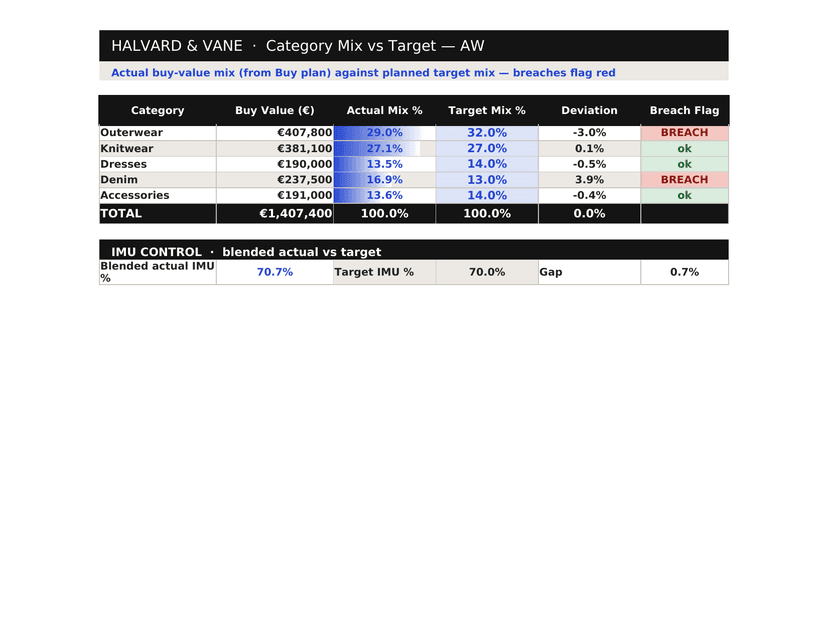
The Pre-Season Buy Plan - Halvard & Vane AW, opened page by page. An example made on McLeuker AI. Its brand and figures are illustrative, as its cover says.
Reports
3 briefings written for retailers & buyers.
Each one is the finished file, opened in full. Every figure in them is illustrative and each says so on its own cover; a real run researches and cites its numbers with an as-of year.

Start
Start the Buy Plan Agent.
Its brief opens in the composer. Fill in the [brackets] and send.
Fashion mode, on the Standard plan and above.
Next lane: Fashion brands. The other side of the buy: the brand deciding the range.
Questions
Before you start.
What does it cost to start?
Signing up costs nothing. There is a Free plan and no card is needed: 300 welcome credits when you verify your email, 100 daily credits you can claim every 24 hours, and 3 questions a day in Instant and Thinking. The agents on the solution pages run in Fashion mode, which opens on the Standard plan and above. What each plan opens is on the pricing page.
How long does a run take?
It depends on the job. A studio run is minutes: a fashion collection takes about three minutes end to end, and a product campaign set about two minutes forty. An agent works through every step of its run and stops when the file is finished, so it takes longer; you can follow each step as it runs.
What do I need to bring?
A question or a brief is enough to start. Studios that work from your own material take it directly: a product photo, a store link or a description for a campaign; garments and a model or your own photo for try-on; a sketch, a reference or an existing spec for a tech pack. You can attach files to a message - one file of up to 10 MB on the Free plan, more on paid plans.
Can I edit the files afterwards?
Yes. Decks are PowerPoint with real text boxes, shapes and native charts; spreadsheets have typed cells and live formulas; Word documents keep their styles, headings and a table of contents that updates. Research reports come as an editable PDF or DOCX.
Is my data used to train models?
No. McLeuker AI does not use your content, your files or your connected-account data to train or fine-tune AI models, as the Privacy Policy and the Terms both state. Limited, aggregated and de-identified logs may be used to improve reliability and security.
Does the destruction ban change how we buy?
Since 19 July 2026, large enterprises may not destroy unsold apparel, clothing accessories or footwear in the EU, apart from a limited list of exceptions. Medium-sized enterprises follow from 2030; micro and small enterprises are exempt. So the buy itself carries the risk. The agent sizes depth against your own full-price sell-through rather than last season's average.
Where does the sales data come from?
From your own exports - sales, stock and receipts by style, size and store - attached to the brief. A connected Shopify store can be read directly through the Connect page.