By Sector · Lifestyle
The category next door is the category.
Wellness, travel and luxury consumer trends. Lifestyle brands rarely lose to a direct competitor; they lose to whatever else the same customer spent that money on.













What this sector is a watch on
Where the customer's attention and spend sit OUTSIDE your category - the adjacent purchase that reframes your own.
How fast the answer goes stale
An adjacency is obvious only once everyone has entered it, which is also when it stops being worth entering.
The adjacency
The same person, choosing in six categories.
Lifestyle is not a product category but a relationship - everything here hangs off one customer, which is why it is a sector at all.
Centre to edge, not a list of peers - all six hang off one person, which is why lifestyle is a sector at all. No spend shares: nobody here measured them.
Lifestyle · the paperwork
What a cross-category read leaves behind.
Breadth is only useful if it lands somewhere a team can act on.
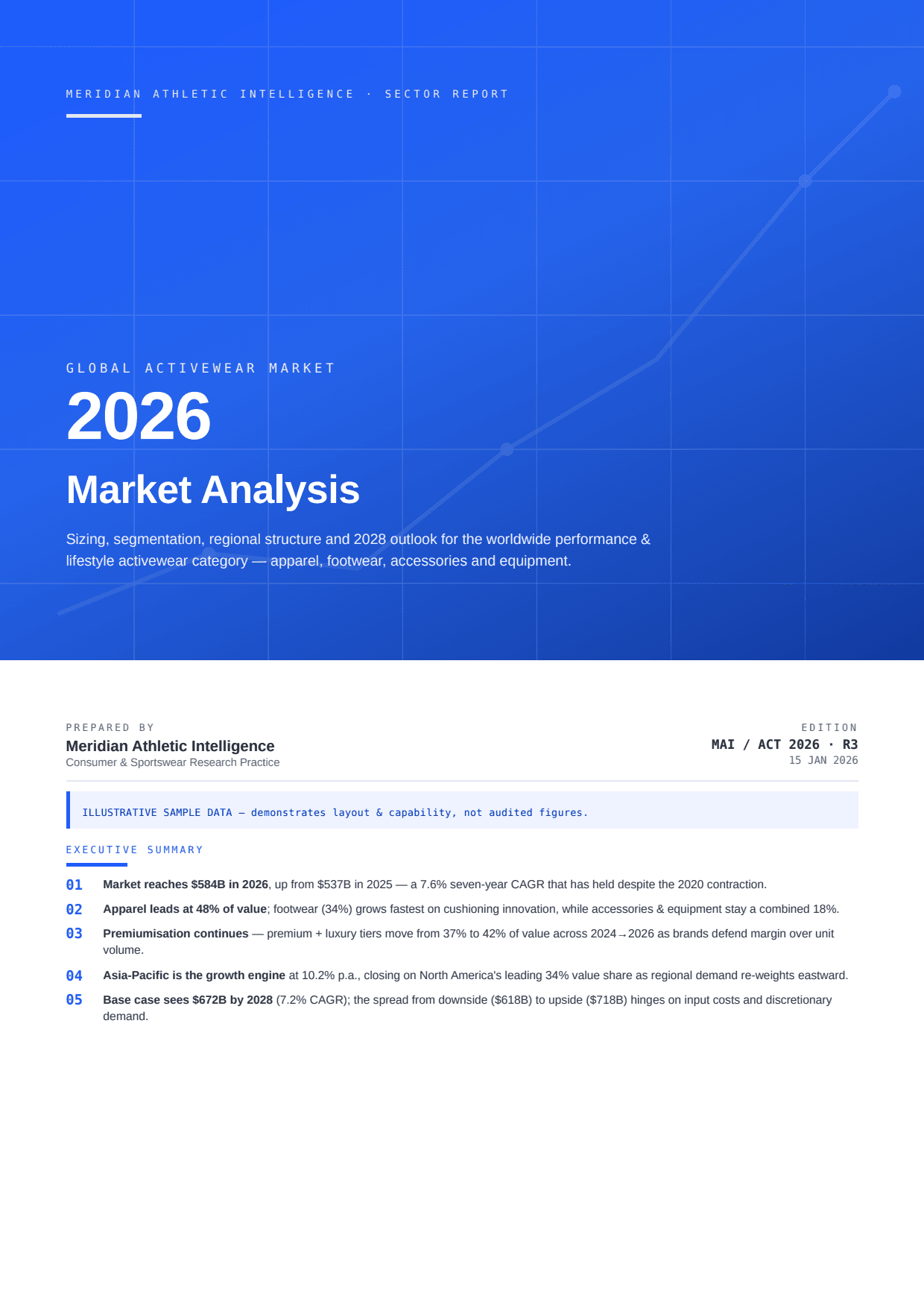
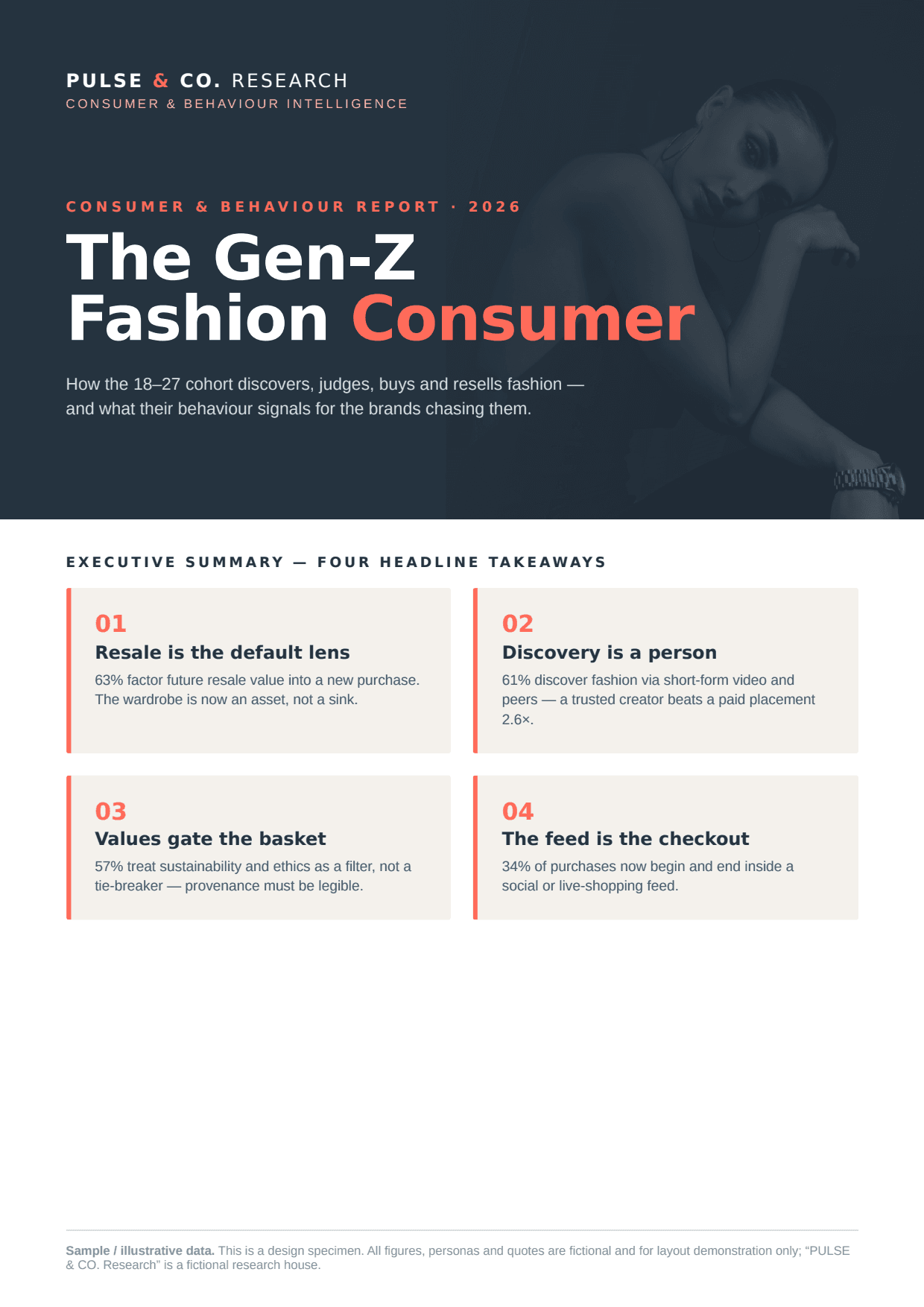
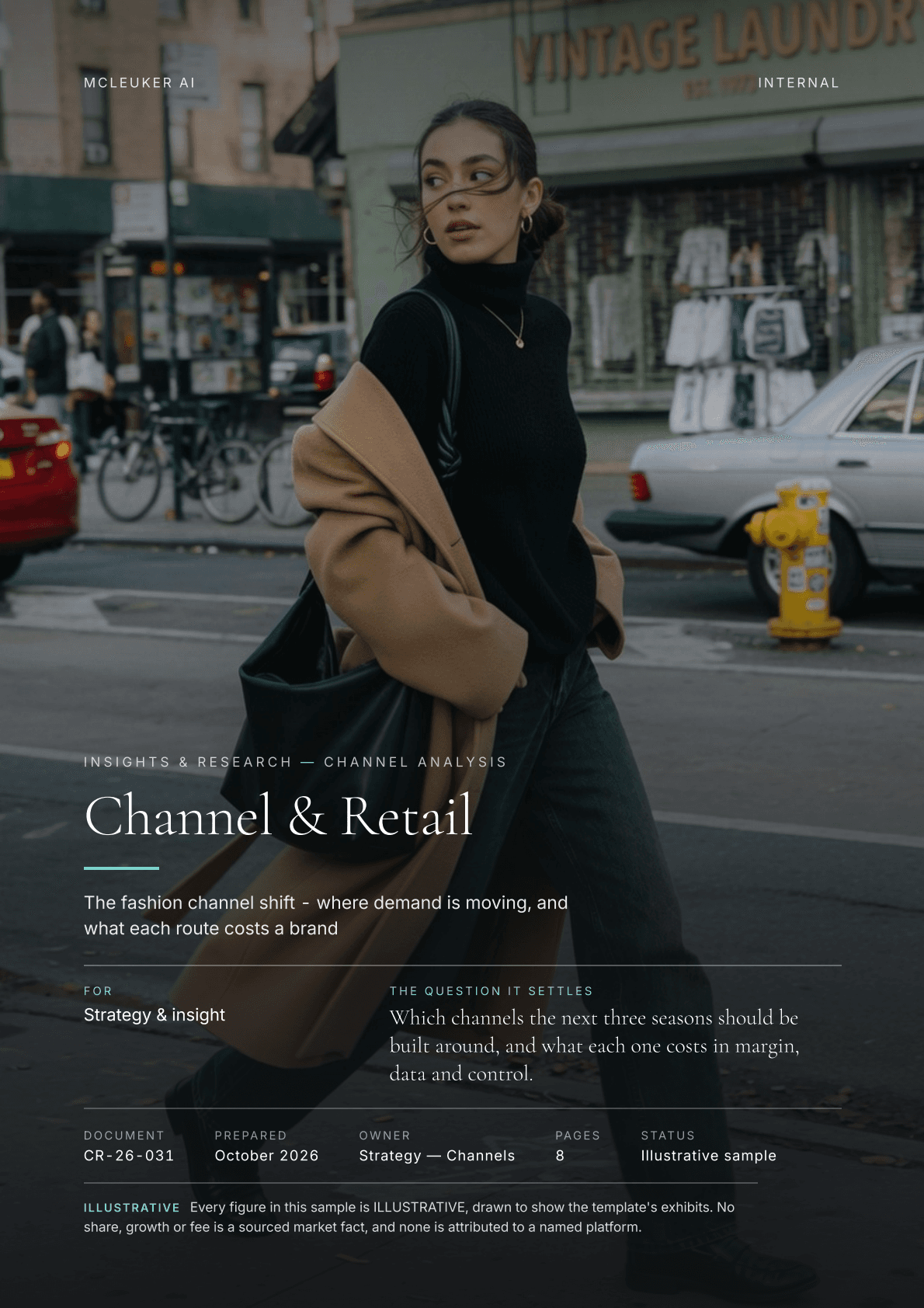

This customer is not buying a category. A trip, a room, a subscription competed for the same money.
The research problem
Breadth is not more of the same work.
A single-category brand can watch its competitors. A lifestyle brand has to watch a customer.
Where the cross-category consumer is spending attention, which adjacencies are opening, and what a category has to look like to reach them.
The concept board, the campaign set and the page that presents the read to a partner or a board.
The content calendar and the media plan that keep the story running past launch week.
The answer cannot come from one source: a home brand losing share to a wellness subscription will not find that in home-category data. So this is a delegation problem, not a search problem - split across specialists who each know a different neighbourhood.
What actually runs
A category this wide is not one specialist's beat, so it is not handed to one. One system, 110 tools and 235 playbooks behind it.
Handed to
- Analyst
- Growth Strategist
- Creative Director
- Researcher
Get started
Start with a lifestyle question.
Ask it in plain language and get the document, the creative or the spec back - sourced, and yours to edit.